
Light and Shadow: Part I — The Quietness of Light
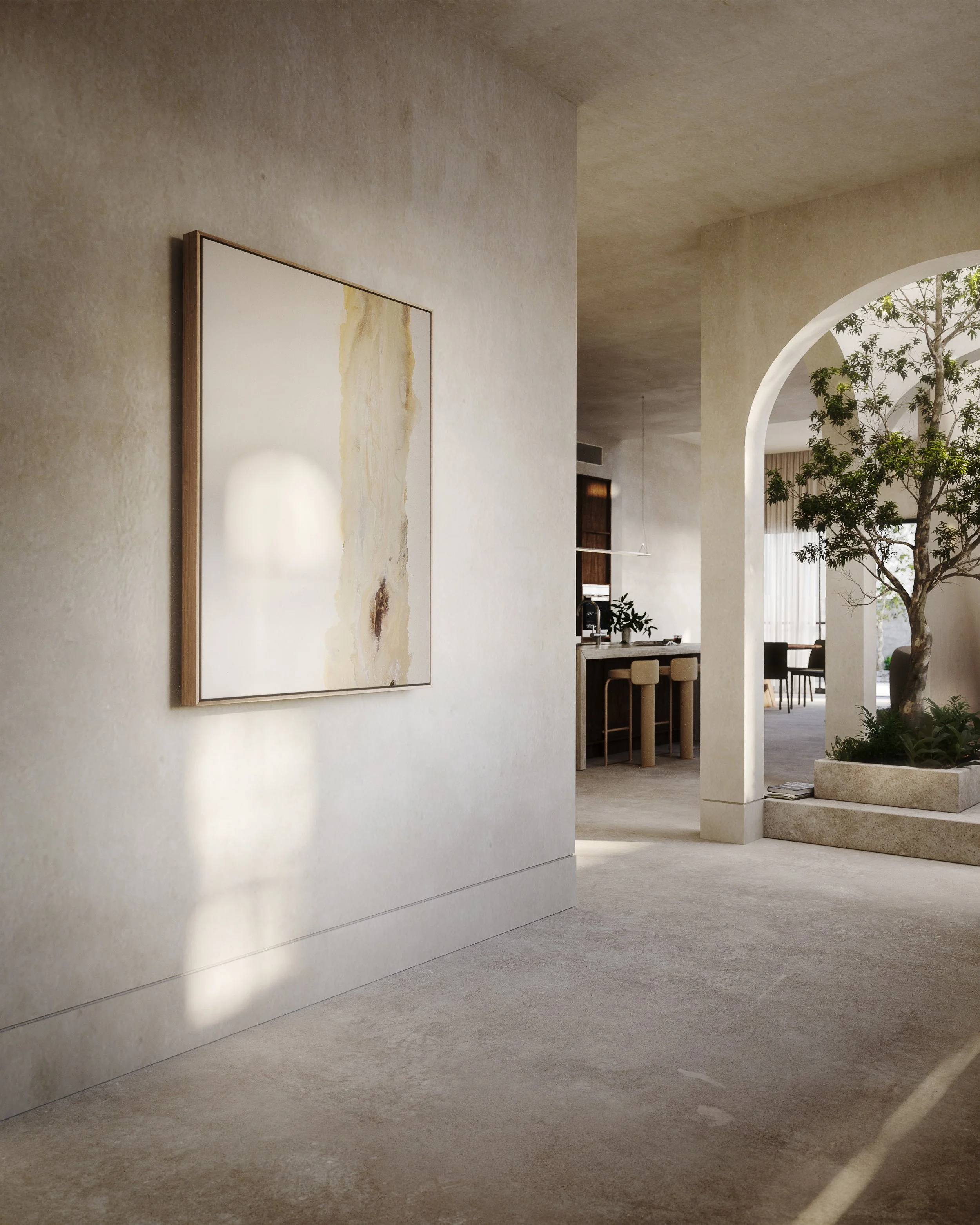
Artwork: “Travertine” | Interior design, visualisation and artwork by Sanae Hayashi
The more I explore the meaning of wabi-sabi through painting, the more I find myself drawn to certain qualities in Japanese architecture and spaces.
When I look for references, I often find myself looking at old wooden buildings, quiet Japanese gardens, simple tatami rooms, and spaces where the materials are allowed to show their natural character.
I am particularly drawn to rough and uneven surfaces: weathered timber, exposed concrete, stone with irregular textures, and materials that have changed with time.
There is something about these spaces that feels deeply familiar to me.
The Japanese interiors I am drawn to are rarely bright or perfectly ordered. They often feel slightly dim, quiet, and almost humid. Things are not always perfectly symmetrical, yet there is still a sense of balance.
Deep eaves and shoji screens prevent strong sunlight from entering directly. Instead, the light becomes soft and diffused, creating layers of shadow throughout the space.
This quality of light is what I find particularly beautiful.
Light does more than illuminate a room. It reveals the texture of materials and changes the way we see a space. It can make a surface feel warm, cool, rough or soft.
What is hidden in shadow becomes just as important as what is in the light.
Perhaps this is why I am drawn to quiet spaces rather than highly illuminated ones. When everything is visible, there is little left to discover.
In a darker space, I begin to notice smaller things: the direction of the light, a change in texture, an uneven surface, or the subtle relationship between light and shadow.
What draws me to wabi-sabi
When I think about traditional Western classical design, I sometimes associate it with a different idea of beauty: symmetry, brightness, proportion and a sense of perfection.
Of course, both Western and Japanese architecture are much more diverse than this simple contrast. But thinking about the difference helps me understand what I am drawn to.
I am drawn to things that do not try to hide their age or irregularity.
For me, wabi-sabi is not simply about making something look old or imperfect. It is about accepting the traces of time and seeing beauty in things that are not perfect.
It is also about learning to notice what we might otherwise overlook.
In a quiet space, with enough shadow and emptiness, small things begin to appear. Light becomes more noticeable. Materials become richer. Imperfections become part of the character of the space.
This is the quality I continue to explore through painting.
And perhaps this is why light and shadow have become more than just something I notice in architecture.
They also make me think about life.
To be continued in Part II.
光と影
Part I — 静かな光
侘び寂びの意味を探すため、参考資料を探す中で、日本の木造建築の木が古びた感じや、庭園が一つの空間になっているような静かな空間、畳の敷かれた素朴な和室によく惹かれます。
特に惹かれるのは、素材の姿がそのまま残っているものです。
時を経て色や表情が変わった木、ぼこぼことしたコンクリート、均一ではない石の表面。きれいに整えられたものよりも、時間の経過や素材そのものの性質が見えるものに惹かれます。
そういう空間を見ていると、どこか懐かしいような、落ち着くような感覚があります。
私が惹かれる日本の室内は、明るく開放的というより、少し薄暗く、静かで、どこか湿り気を感じる空間です。
すべてが規則正しく、左右対称に並んでいるわけではない。それでも、そこには不思議なバランスがあります。
深い軒や障子によって、光は室内に直接入りません。
そのため、光はやわらかく拡散され、空間の中に静かな陰影の層をつくります。
私は、この光のあり方に特に惹かれます。
光は、ただ部屋を明るくするためだけにあるのではありません。
光の方向によって、素材の表情が変わり、空間の温度まで違って感じられる。木の表面や石の凹凸も、光と影によって初めて見えてくるものがあります。
影に隠れているものも、光の当たっているものと同じくらい大切なのかもしれません。
すべてが見えてしまう明るい空間よりも、少し見えにくい空間の方が、私はつい目を凝らしてしまいます。
光がどこから入っているのか。
素材はどんな表情をしているのか。
どこに影が落ちているのか。
そして、光と影がどのように空間をつくっているのか。
なぜ侘び寂びに惹かれるのか
西洋のクラシックなデザインを思い浮かべると、私には、シンメトリーや明るさ、整ったプロポーション、そして理想的な美しさという印象があります。
もちろん、西洋と日本の建築をこのように単純に分けることはできません。
それでも、この違いを考えることで、自分が何に惹かれているのかが少し見えてきます。
私は、時間の経過や不完全さを隠そうとしないものに惹かれます。
私にとって侘び寂びとは、単に古いものや不完全なものを美しいと思うことではありません。
時間が残した痕跡をそのまま受け入れ、そこに美しさを見つけること。
そして、普段なら見過ごしてしまうようなものを見ること。
静かで余白のある空間では、小さなものが見えてきます。
光の方向。
素材の表情。
影の濃淡。
不均一な表面。
そうしたものが、空間そのものの豊かさになっていく。
私は、そんな静かな美しさを絵の中でも探しています。
そして、光と影について考えていると、いつの間にか建築や素材だけではなく、人生についても考えるようになりました。
Part IIへ続く。
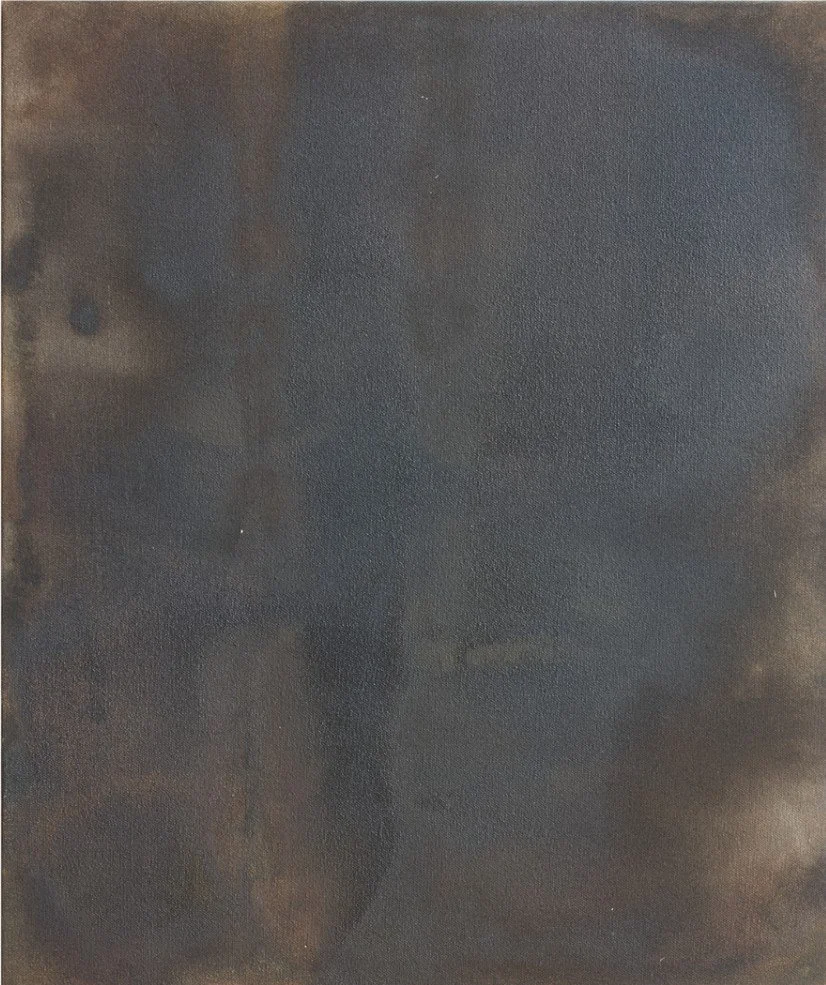
“Patina” - Aging In Stillness by Sanae Hayashi
